
Ai-created illustration
Building Belonging, One Classroom at a Time
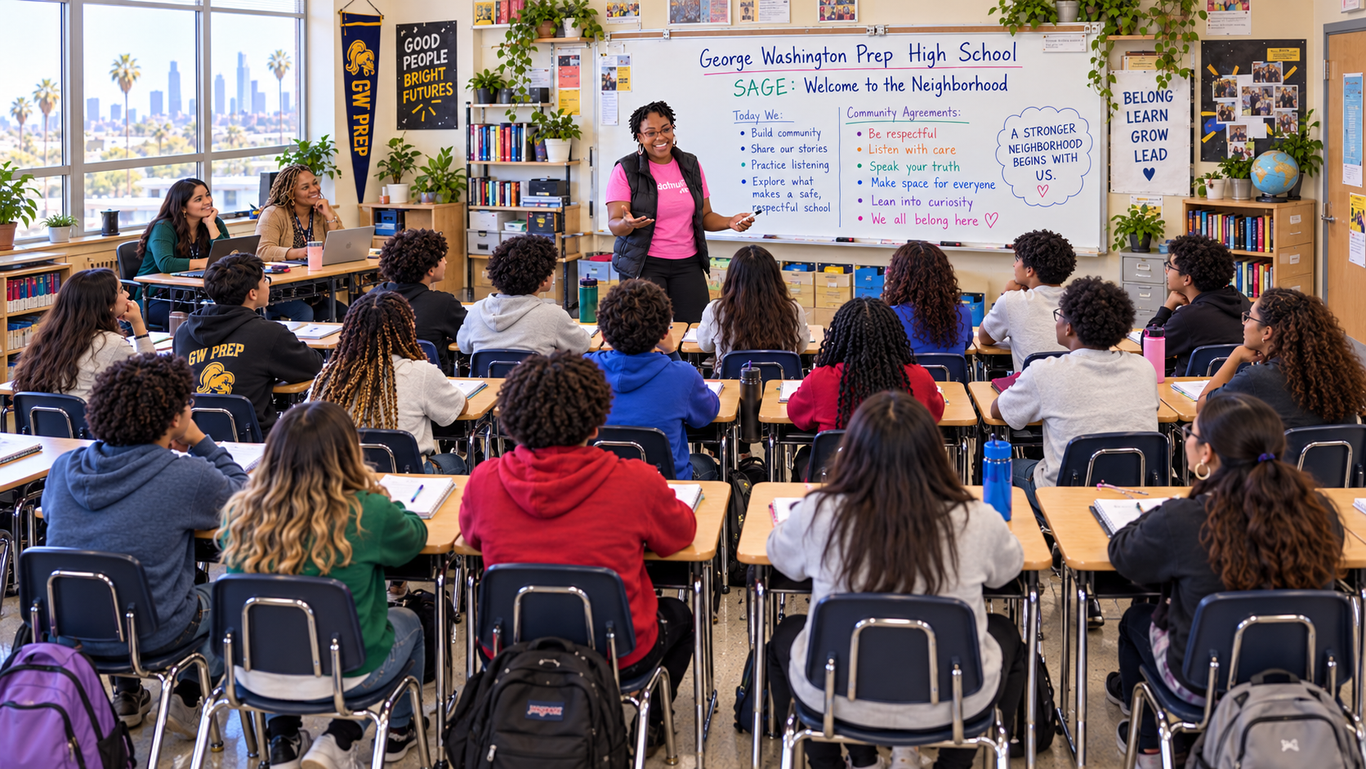
At George Washington Prep High School, I brought restorative experiences into Ms. Lockhart’s and Ms. Luis’s advisory classes. Through stories, photographs, reflection, and letters from men in prison, students explored identity, grief, choices, relationships, and the communities shaping their lives.
Some shared aloud. Others let their writing speak. Their reflections named stress, anxiety, loneliness, the need for peace, and the comfort of friendship and family. I watched students make room for their own voices and for one another.
For me, disrupting the school-to-prison pipeline begins with this work: listening, helping young people name their needs, practicing accountability, and building a community they can turn to. This week gave us a place to begin.
We explored the neighborhoods that shaped us, and what it could mean to build one together.
Across their reflections, students described feeling overwhelmed, stressed, anxious, lonely, and tired. Some shared feeling trapped in their thoughts, carrying negativity, or struggling with pressure at school and at home. Others found connection in friendship, teammates, family, quiet moments, and places that bring them peace.
Their words also expressed hope, a desire for happiness, belonging, and the determination to keep moving forward. Together, these reflections show the range of feelings students carry into the classroom and the value of giving them space to be seen, heard, and supported.
Explore students’ reflections on emotions, identity, and belonging from our week of restorative experiences at George Washington Prep High School.
Ai-created illustration
For Children & Students (Pre-K-Middle School)
SAGE Intervention creates space for young people to understand what they are carrying and practice new ways of responding (navigating conflict, emotional distress, loss, and difficult transitions). Through restorative experiences, participants build emotional awareness, coping skills, accountability, empathy, and the confidence to ask for help. Together, they work toward repairing harm, strengthening relationships, and building a neighborhood of support and belonging.
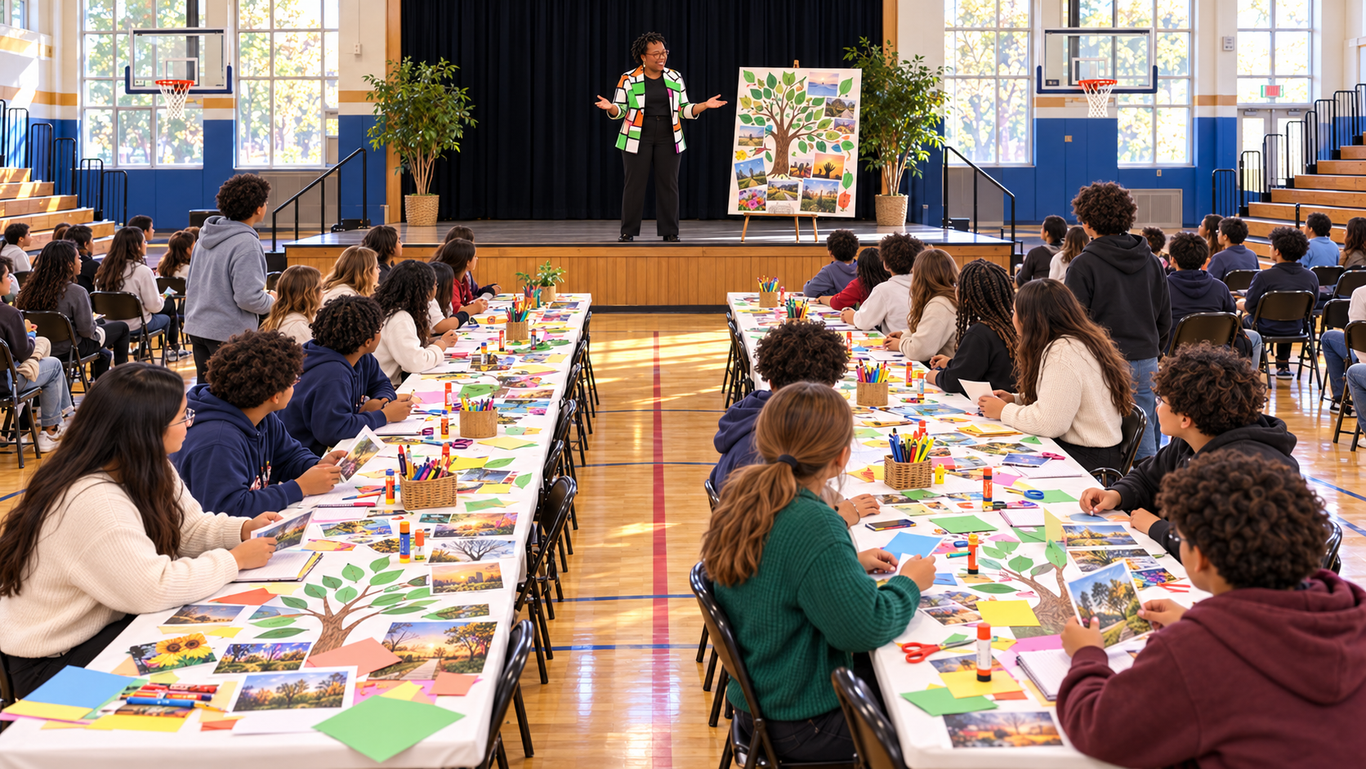
Through creative activities, reflection, and restorative conversations, participants practice:
- Safety: recognizing needs, setting boundaries, and asking trusted people for help.
- Self-awareness: exploring identity, emotions, strengths, and influences on their choices.
- Accountability: recognizing the impact of their actions, taking responsibility, and making repair.
- Grief and transitions: expressing loss, identifying support, and developing coping tools.
- Empathy: understanding others’ perspectives, managing conflict, and building supportive relationships.
These experiences offer opportunities to practice emotional management, thoughtful decision-making, communication, and teamwork.